
How Long Do Breast Implants Last? Why 10 Years Is Not a Deadline
Breast implants have no guaranteed lifespan or automatic 10-year replacement date. Learn what prompts monitoring, imaging, revision or removal.
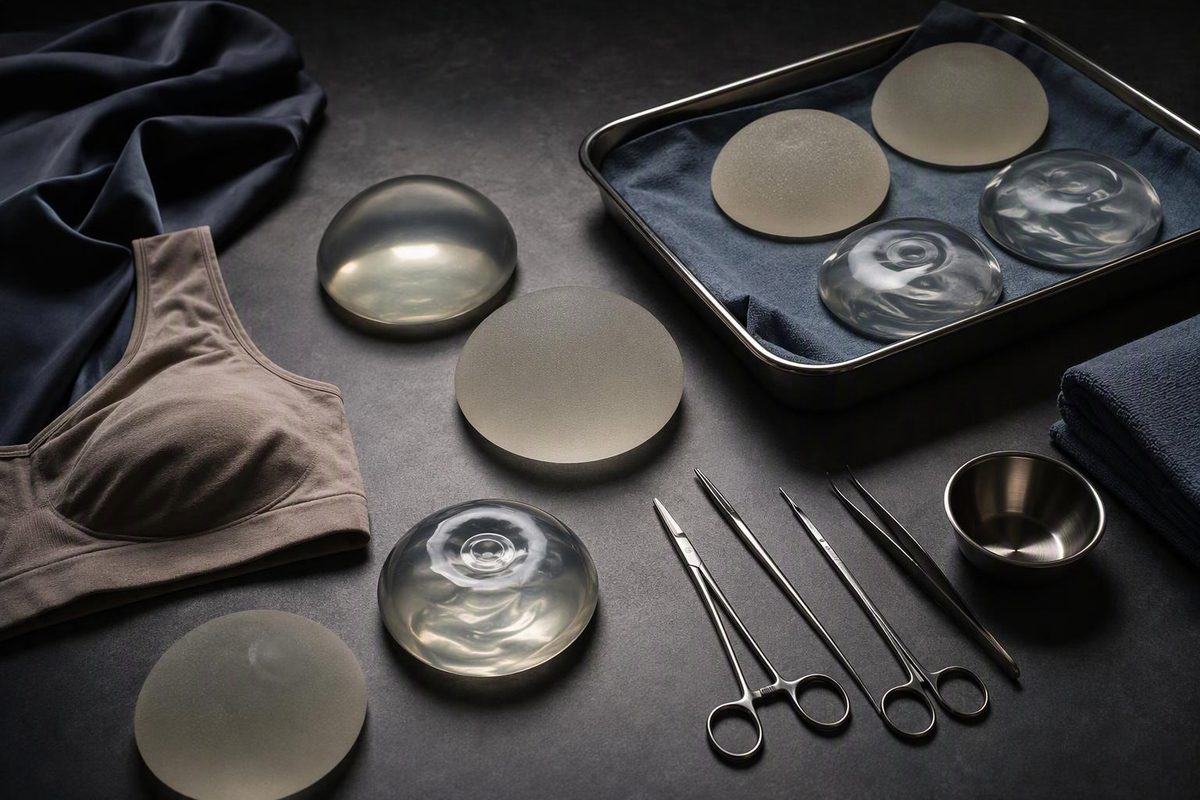
Breast implants do not have a fixed expiration date. Some last well beyond 10 years; others require removal or replacement much sooner. The commonly quoted 10-year lifespan is a planning benchmark, not a deadline for automatic replacement.
The FDA describes breast implants as non-lifetime devices. Complications become more likely the longer an implant is in place, and some require another operation. It also says an implant’s lifespan varies by person and cannot be predicted (FDA).
Do breast implants need replacing every 10 years?
No—not solely because they have reached their tenth anniversary. The FDA has not set a routine replacement deadline, and the American Society of Plastic Surgeons notes that implants have no formal expiration date (ASPS).
If an implant is intact, there are no concerning symptoms or findings, and the result remains acceptable to the patient, a surgeon may recommend continued monitoring rather than surgery. Conversely, an implant may need attention before 10 years because of rupture, painful hardening, infection, displacement or another problem.
Implant age still matters: the chance of complications rises over time. But age alone does not establish that an implant has failed or must be exchanged.
What determines how long an implant stays in place?
An implant may be removed or replaced because of:
- Rupture or deflation. A saline implant normally loses volume when its shell fails, making the change easier to notice. A silicone-gel rupture may cause no obvious change.
- Capsular contracture. The natural scar capsule around an implant can tighten, making the breast firmer, distorted or painful. Subtle early signs of capsular contracture can include one breast gradually feeling less mobile.
- Movement or visible rippling. An implant can shift, become more noticeable or no longer sit as intended.
- Infection, pain or fluid around the implant. These require clinical assessment. Treatment does not always involve replacement, but surgery may be necessary.
- Changes in the breast rather than device failure. Aging, pregnancy, weight changes and changes after cancer treatment can alter the result while the implant remains intact.
- A change in preference. Replacement is not the only option. Breast revision can involve exchange, repositioning or removal without another implant.
These issues apply to cosmetic augmentation and implant-based reconstruction. An individual’s history—including mastectomy, radiation treatment and previous revisions—can affect the available options and risks.
Silicone implants need rupture screening
For silicone gel-filled implants, the FDA’s labeling recommendations call for an ultrasound or MRI five to six years after surgery and every two to three years after that, even when there are no symptoms. MRI is recommended when symptoms are present or an ultrasound result is uncertain. Saline implants do not have this routine rupture-screening schedule because deflation is usually detectable without imaging (FDA guidance).
Implant surveillance is separate from mammography or other breast-cancer screening; one does not replace the other. Tell the imaging facility that you have implants when arranging breast imaging.
Keep your patient device card. It should include the implant’s style and size, serial or lot number, unique device identifier, a link to current labeling and the manufacturer’s contact number (FDA guidance). This information can help a clinician identify the device and check relevant safety notices. If the card is missing, ask the surgeon or hospital for a copy of the operative report and implant records.
Changes that need assessment
Contact a qualified healthcare professional promptly if you notice a new change in breast size or shape, increasing firmness, a lump, persistent pain, swelling, redness, warmth or enlarged lymph nodes. Sudden saline deflation is generally noticeable, while a silicone rupture can be “silent.”
Persistent swelling, a mass or pain around an implant—particularly a delayed change years after surgery—also needs evaluation. These symptoms can have several causes, but the FDA lists them among the possible signs of breast implant-associated anaplastic large cell lymphoma (BIA-ALCL). This is not breast cancer; it is a lymphoma that occurs more often in patients with textured implants than in those with smooth implants (FDA guidance).
Plan for long-term ownership, not a replacement date
Before surgery, ask for the manufacturer’s patient labeling and complication data for the exact implant being proposed. After surgery, record the implant date, keep its identifying information and follow the recommended screening schedule.
It is also sensible to budget for imaging and the possibility of another operation. A later implant revision can cost about as much as the original surgery, and insurance coverage varies.
The practical answer is not “replace at 10 years.” It is to expect long-term monitoring and base removal or replacement decisions on symptoms, imaging, examination findings and personal goals—not the calendar alone.