
Gummy Bear Implants: Form-Stable Silicone Breast Implants
The nickname alone does not specify round versus anatomical shape, smooth versus textured shell, or whether the implant fits a particular patient.
The short answer: what gummy bear implants are
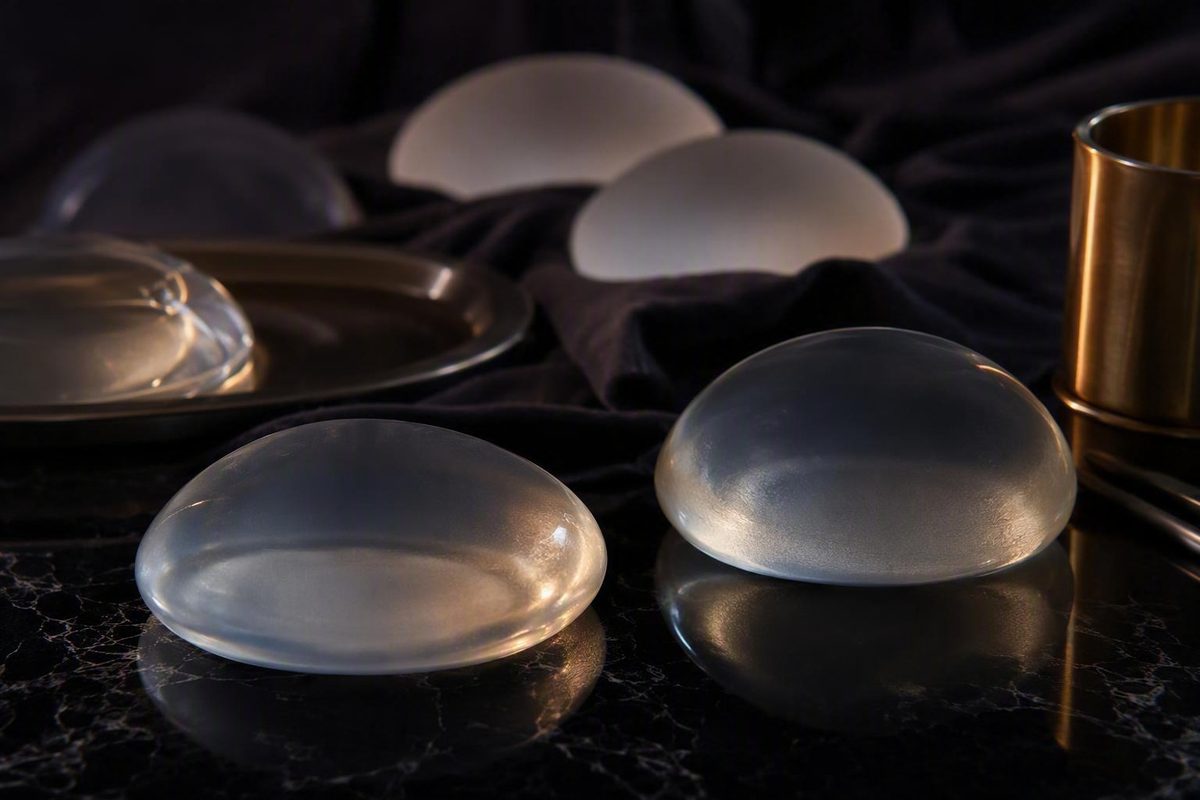
A gummy bear implant is a breast implant with a silicone shell filled with highly cohesive, form-stable silicone gel. It is a subtype of silicone implant—not a separate filling category alongside silicone and saline.
The silicone gel is more extensively cross-linked than less-cohesive implant gel. The nickname refers to this form-holding consistency: when the filling is cut or compressed, it tends to stay together rather than behave like a runny liquid. A plastic-surgery practice’s technical explanation describes the silicone shell, cross-linked gel and form-holding “gummy bear” effect.
A useful one-sentence definition is:
A gummy bear implant is a silicone breast implant whose relatively thick, highly cohesive gel is designed to hold its form.
“Gummy bear” is an informal term rather than a complete device specification. Some sources use it broadly for highly cohesive silicone implants; others use it more narrowly for shaped implants. The nickname alone does not tell you whether an implant is round or anatomical, whether its shell is smooth or textured, or whether it is appropriate for a particular patient.
Form stability also does not mean invulnerability. A gummy bear implant is not rupture-proof, leak-proof, maintenance-free or guaranteed to remain unchanged. Its filling may behave differently from thinner silicone gel when the shell is damaged, but the implant can still rupture and may require evaluation or further surgery.
Gel, shape and shell surface are three different choices
Much of the confusion about gummy bear implants comes from combining three separate device characteristics:
- Gel cohesiveness describes the filling inside the implant.
- Shape describes the implant’s outline and distribution of projection.
- Shell surface describes the exterior of the implant.
“Gummy bear” primarily refers to the first characteristic: gel cohesiveness.
Gel cohesiveness
Silicone gels can vary in thickness, firmness and form stability. Highly cohesive gel generally retains its form more strongly than less-cohesive gel. The exact degree of cohesiveness can also differ among implants.
Gel properties can influence how strongly an implant maintains its profile, how readily it folds and how firm or structured it feels. Gel cohesiveness does not, by itself, determine the implant’s shape or shell surface.
Implant shape
A highly cohesive implant can be round or anatomically shaped. One clinic comparison expressly describes gummy bear implants in both versions, so the term should not automatically be translated as “teardrop-shaped.” Its implant overview distinguishes round and shaped highly cohesive devices.
A round implant is broadly symmetrical around its center. If it rotates within the surgical pocket, its outline does not change in the same orientation-dependent way.
An anatomical implant has a defined top and bottom. It is generally fuller toward the bottom and tapered toward the top, creating the outline often described as a teardrop. This shape is one possible implant design; it is not the definition of gummy bear gel.
Orientation matters for an anatomical implant because its upper and lower contours differ. If the fuller portion turns sideways or upward, the breast’s visible shape can change. A round implant can still move or become displaced, but simple rotation does not redirect a distinct fuller lower portion.
Shell surface
Shell surface is a separate specification. Gel cohesiveness does not establish whether the exterior is smooth or textured. Questions about shell-related risks, warnings, regulatory history or handling should therefore focus on the exact device rather than the gummy bear nickname.
The supplied evidence consists mainly of commercial plastic-surgery pages, some of which combine highly cohesive gel with a particular shape or surface. That evidence is not sufficient to identify currently available models, approval status, recalls or the present shell-related risks of any specific product. Those matters require current primary regulatory information and exact device labeling.
Do not assume that:
- highly cohesive means teardrop-shaped;
- teardrop-shaped means highly cohesive;
- highly cohesive means textured; or
- round means less cohesive.
Instead, ask the plastic surgeon to identify:
- the exact implant model;
- the gel’s degree of cohesiveness;
- whether the implant is round or anatomical; and
- whether the shell is smooth or textured.
Those questions are more informative than asking only whether an implant is a “gummy bear.” They also help prevent a question about shell safety from being answered with unrelated information about the gel.
Gummy bear vs. traditional silicone vs. saline implants
Gummy bear and traditional silicone implants are both silicone-gel implants. The principal distinction is the gel’s cohesiveness. Saline implants use a different filling: sterile salt water held inside a silicone shell.
The table below summarizes general tendencies described in the supplied implant comparisons. It should not be read as model-specific performance data. Results depend on the exact device, anatomy, tissue coverage, implant dimensions, placement and surgical technique. A clinic comparison supports the basic distinctions among highly cohesive silicone, less-cohesive silicone and saline filling.
| Feature | Highly cohesive “gummy bear” silicone | Less-cohesive or traditional silicone | Saline |
|---|---|---|---|
| Filling | Thick, highly cohesive silicone gel inside a silicone shell | Less-cohesive silicone gel inside a silicone shell | Sterile salt water inside a silicone shell |
| Relative firmness | Generally firmer and more structured | Generally softer or less form-stable than highly cohesive gel | Has fluid filling that behaves differently from silicone gel |
| Shape stability | Designed to retain its form more strongly | Gel adapts and flows more readily within the shell | Fluid filling does not have the form stability of highly cohesive gel |
| Incision considerations | Prefilled and relatively firm; insertion may require a somewhat longer opening | Also prefilled; requirements vary with size and technique | Shell can be inserted before filling, potentially allowing a smaller insertion opening |
| Visible rippling | May show less folding or visible rippling in some patients | May fold or ripple more than a more form-stable implant | Rippling may be visible, particularly when tissue coverage is limited |
| What rupture may look like | May not cause obvious deflation because cohesive gel can remain relatively localized | May also rupture without obvious volume loss | Commonly causes visible volume loss as saline leaves the shell |
Firmness and shape stability
Highly cohesive gel is generally firmer and more shape-retaining than less-cohesive silicone gel. Some people may prefer that stable structure, while others may prefer a softer or less structured implant. “Firmer” is a characteristic, not an automatic advantage or disadvantage.
Gel alone cannot predict the final appearance or feel. Natural tissue, implant width and projection, tissue coverage, pocket design and placement all influence the result.
Rippling
Thicker, form-stable gel may reduce folding or visible rippling in some circumstances, but it does not eliminate either problem. The shell can still fold, and implant edges or irregularities may remain visible or palpable.
Tissue coverage is especially important. Claims that an implant “does not ripple” go beyond the supplied evidence.
Incision considerations
Silicone implants are prefilled and must be inserted at their final volume. A relatively firm cohesive implant may require a somewhat longer incision than a saline shell that can be placed first and filled afterward. A comparison of form-stable and saline implants describes this general insertion difference, while also noting that saline contains sterile salt water and tends to deflate visibly after rupture. The comparison is from a commercial plastic-surgery practice rather than an independent clinical guideline.
Filling material is only one part of that decision.
Rupture visibility
The practical difference is not simply whether rupture can occur, but whether it will be obvious.
When a saline implant ruptures, the breast commonly loses volume as the salt water leaves the shell. A silicone implant can rupture without obvious deflation. Highly cohesive gel may remain close to the implant or within the surrounding capsule, allowing the breast to retain much of its apparent shape.
That does not establish that a silicone rupture is harmless. It means appearance alone may not reliably show whether the shell is intact.
Potential advantages—and where the evidence is limited
The defining engineering characteristic of a gummy bear implant is shape retention. The thicker gel is designed to resist flowing and maintain a more stable form than less-cohesive silicone gel.
That characteristic may create practical advantages, but the evidence pack does not include independent comparative studies, systematic reviews or current model-specific regulatory documents. The potential benefits therefore need to be stated narrowly.
More stable contour
A form-stable implant may appeal to someone who wants the implant to preserve a defined profile. That may matter when a surgical plan depends on a particular combination of width, projection and contour.
Stable contour is a preference, not proof of a universally better cosmetic outcome. Some people may prefer more structure; others may prefer the softness or movement associated with a less-cohesive implant. The surrounding tissue also determines how clearly the underlying implant shape appears.
Potentially less folding or visible rippling
Because highly cohesive gel holds together more firmly, it may reduce folding or visible rippling in some patients. A clinic description of highly cohesive implants associates their shape retention with less rippling or wrinkling, but it does not provide independent comparative rates. The claim should therefore be treated as a potential tendency rather than a guaranteed result.
The appropriate wording is “may reduce,” not “prevents.” Anatomy, tissue coverage, implant dimensions, placement and technique remain important.
Gel may remain relatively localized after rupture
If the shell is compromised, highly cohesive gel may remain more localized than a less-cohesive filling. This helps explain why an implant can retain its apparent form after damage rather than immediately deflate.
Localization has two sides. Less movement of the gel may sound reassuring, but retention of the implant’s shape can make rupture harder to recognize. Cohesive filling does not turn a ruptured implant into an intact one or establish that the damage can be ignored.
Claims the evidence does not establish
Commercial pages in the evidence pack make broader claims about lower rates of rupture, leakage, capsular contracture or reoperation. They do not provide the independent, quantified and model-specific comparative evidence needed to present those outcomes as established advantages.
Such claims may depend on:
- the exact implant model and shell;
- what alternative is being used for comparison;
- cosmetic augmentation versus reconstruction;
- patient characteristics;
- surgical technique; and
- length of follow-up.
If a benefit is presented during a consultation, ask:
- Which exact device is being discussed?
- What is the comparison implant?
- Does the evidence concern the gel, shape, shell or entire device?
- Is the evidence independent and comparative?
- How long were patients followed?
- What is the absolute event rate?
Appearance and feel are subjective. No evidence in the supplied pack supports promising a natural-looking or natural-feeling result for every patient.
Tradeoffs, surgical risks and shaped-implant rotation
The characteristics that provide shape stability can also create tradeoffs. A highly cohesive implant may feel firmer, may require a somewhat longer insertion incision and may demand precise pocket creation and positioning. Shaped or newer cohesive devices may also cost more than standard silicone devices.
General surgical and implant risks
The supplied consumer-health and clinic sources list potential risks including bleeding, infection, pain, scarring, changes in nipple or breast sensation, asymmetry, displacement, rupture and additional surgery. A result may also differ from what the patient expected. Healthline’s overview lists these general complications but was last updated in 2018, so it should not be used for current regulatory or surveillance instructions.
Another implant-related complication is capsular contracture. The body naturally forms scar tissue around an implant, creating a capsule. Capsular contracture is tightening of that tissue, which can make the breast feel firm or change its position. The supplied evidence does not establish a current comparative rate for highly cohesive versus other implants, nor does it support claiming that gummy bear implants prevent the complication.
Form stability does not eliminate general surgical or device risks. Similarly, approval by a regulator, where applicable to an exact device and indication, would not mean that the implant is risk-free or suitable for every patient.
Why anatomical-implant rotation matters
An anatomical implant has a distinct upper and lower contour. If the fuller lower portion rotates sideways or upward, the breast’s visible shape may change. One clinic description specifically identifies distortion after anatomical-implant rotation and says surgical correction may be required. That source supports the mechanism and possible need for another operation, but it does not quantify how often rotation occurs.
A round implant does not have the same orientation-dependent outline. It can still shift, become displaced or contribute to asymmetry, but simple rotation does not redirect a distinct teardrop contour.
Keep shell questions separate
Some commercial sources associate anatomical implants with textured shells intended to help maintain orientation. That does not mean every highly cohesive implant is textured, nor does it establish that gel cohesiveness determines shell-related safety.
The evidence pack does not contain current primary information sufficient for a responsible account of product recalls, textured-shell risks or related regulatory developments. Readers should review current information for the exact proposed device with a board-certified plastic surgeon and consult the device’s current patient labeling and applicable regulator materials.
The practical question is not simply, “Is this a gummy bear implant?” It is:
What exact device is proposed, and which risks arise from its gel, shape, shell, dimensions and placement?
Rupture can be silent: monitoring and long-term ownership
Gummy bear implants can rupture. Because their cohesive gel may remain largely in place or inside the surrounding capsule, damage may not produce the obvious loss of volume commonly associated with a saline rupture.
A silent rupture is damage to a silicone implant that does not cause obvious deflation and may not produce readily apparent symptoms. A clinic overview explains that the form-holding gel can make rupture difficult to recognize from appearance alone. The source also recommends periodic imaging, although current timing must be confirmed elsewhere.
The supplied evidence does not support a detailed symptom checklist or rules assigning urgency to particular changes. If an implant problem is suspected, seek individualized clinical advice rather than trying to determine shell integrity by appearance or touch.
Imaging and follow-up
Periodic ultrasound or MRI may be recommended to assess silicone implant integrity. The evidence pack, however, does not contain current FDA guidance or current labeling for a particular device. It therefore cannot support a fixed surveillance schedule.
Before surgery, verify the monitoring plan against:
- current FDA guidance;
- current patient labeling for the exact implant;
- the treating clinician’s recommendations; and
- individual clinical circumstances.
Ask who will arrange imaging, what type may be used, how results will be interpreted and what happens if a study is inconclusive. Do not rely on a fixed interval copied from an older clinic or consumer article.
Conversely, the possibility that cohesive gel may remain localized is not a reason to disregard known or suspected implant damage.
Implants are not lifetime devices
Breast implants are not lifetime devices. Removal, replacement or revision may eventually be considered because of rupture, capsular contracture, displacement, rotation, asymmetry, changes in surrounding tissue, a change in cosmetic preference or another clinical concern. The evidence supports the general point that implants may ultimately require replacement, but it does not establish a predictable lifespan for gummy bear implants.
There is no universal expiration date that follows from the nickname. In particular, “10 years” should not be treated as an automatic replacement deadline or a guaranteed lifespan. Decisions about observation or intervention depend on the device’s condition, clinical findings and individualized advice.
Long-term ownership may include keeping implant records, attending appropriate follow-up, arranging integrity imaging when recommended and accepting that another operation may eventually be needed.
Surgery, recovery and whether the implant matches the goal
A gummy bear implant is used within a surgical procedure, most commonly breast augmentation or breast reconstruction. It is not a stand-alone nonsurgical treatment.
The operation is planned around more than the implant filling. Relevant factors include anatomy, tissue coverage, chest and breast dimensions, implant width and projection, incision location, pocket placement, symmetry and whether another procedure will be performed at the same time.
Incision and placement are individualized
The incision must accommodate the implant while permitting controlled placement. Because a cohesive silicone implant is prefilled and may be relatively firm, its insertion requirements differ from those of an empty saline shell that is filled after insertion.
Implants may be placed in different tissue planes, but the evidence pack does not support recommending one placement as universally preferable. The decision depends on anatomy, available tissue coverage, implant dimensions, the cosmetic or reconstructive goal and the surgeon’s plan.
An anatomical implant adds an orientation requirement: it must be positioned with its fuller and tapered portions in the intended directions. Round implants avoid that particular top-to-bottom contour issue, although accurate pocket creation and implant position remain relevant.
Early recovery
Swelling, bruising and discomfort can occur during early recovery. Their intensity and duration vary with the operation and the individual. A 2025 clinic article describes those early experiences and recommends temporary limits on strenuous activity, but its suggested timeline is practice-specific rather than universal guidance. Patients should follow the instructions provided by their own surgical team.
Instructions about wound care, support garments, sleep position, driving, lifting, work and exercise should come from the operating team.
Before leaving the surgical facility, ask whom to contact about concerns during and outside normal office hours. The supplied evidence is not sufficient to define which specific postoperative symptoms require emergency, urgent or routine assessment.
Volume and drooping are different goals
Breast augmentation primarily adds volume and changes breast size or contour. It does not reliably correct substantial drooping by itself. If sagging or nipple position is the primary concern, ask whether an implant alone can address the goal or whether a breast lift is a separate consideration.
A lift and an implant address different objectives: one reshapes and elevates tissue, while the other adds volume. The evidence supports discussing this distinction, but an individualized recommendation requires a surgical assessment.
Who might consider a highly cohesive implant?
The evidence does not establish one demographic or body type as the ideal candidate. A highly cohesive implant may be worth discussing when shape stability or reduced folding is a priority, but those preferences must be balanced against firmness, insertion requirements, monitoring, cost and possible future surgery.
Selection should account for:
- breast and chest anatomy;
- amount and quality of tissue coverage;
- desired size, projection, contour and firmness;
- whether a round or anatomical shape fits the goal;
- tolerance for the rotation concern associated with anatomical implants;
- lifestyle and activity considerations;
- comfort with follow-up and possible integrity imaging;
- willingness to accept possible revision or removal; and
- alternatives, including less-cohesive silicone, saline, another reconstructive approach, a lift or no surgery.
The aim is not to choose the implant with the most appealing nickname. It is to determine whether a particular device and surgical plan fit the patient’s anatomy, priorities and tolerance for risk.
Cost factors and questions to take to a consultation
Shaped or newer cohesive devices may have a higher device cost than standard silicone implants, but the evidence does not establish a reliable national price specifically for gummy bear implants. Breast Report’s cost coverage places those devices above standard silicone implants while emphasizing that the implant itself is only one part of the bill. The estimates are publisher-provided general figures rather than manufacturer-specific pricing.
A complete surgical quote may include:
- the implant or implant pair;
- the surgeon’s professional fee;
- anesthesia;
- operating-room or facility charges;
- preoperative tests;
- prescriptions;
- postoperative garments;
- follow-up; and
- any additional procedures.
An “implant price” and a complete “surgery price” are not the same. A lower advertised figure may exclude anesthesia, facility charges, tests, garments or follow-up. Old single-clinic estimates are particularly weak benchmarks because prices vary by location, surgeon, facility, procedure and date.
Budget for ownership, not only implantation
Long-term budgeting may need to account for ultrasound or MRI, appointments to investigate suspected problems and possible removal, replacement or revision.
Warranty terms should be checked in the current documents for the exact implant. The supplied sources do not establish what any current manufacturer warranty covers. Ask whether coverage is limited to the device or extends to any portion of professional, anesthesia, facility, imaging or other expenses.
Consultation checklist
Request clear, model-specific answers to these questions:
- What is the exact implant model?
- How cohesive is its gel compared with the alternatives you offer?
- Is it round or anatomically shaped?
- Is its shell smooth or textured?
- Why does this device fit my anatomy and goal?
- What width, projection and volume are proposed?
- What incision and placement do you recommend, and why?
- If it is anatomical, how could rotation affect the result?
- How would a visibly rotated implant be treated?
- What monitoring plan applies to this exact implant?
- Which current regulatory guidance and patient labeling support that plan?
- What should prompt me to contact the practice?
- How would a suspected rupture be evaluated?
- What does the current manufacturer warranty cover and exclude?
- What would revision, removal or replacement cost under the practice’s current fees?
- Does the quote include every preoperative and postoperative line item?
- Would an implant alone address my goal, or should I separately discuss a lift?
- What reasonable alternatives are available, including no surgery?
Ask for an itemized written quote separating the device price from the complete surgical price. If another procedure is planned, ask for its charges to be identified separately.
Frequently asked questions
Are gummy bear implants silicone implants?
Yes. A gummy bear implant is a subtype of silicone breast implant. It has a silicone shell containing highly cohesive silicone gel.
The useful comparison is not “gummy bear versus silicone” as if they were unrelated materials. It is highly cohesive silicone versus less-cohesive silicone, followed by a separate comparison with saline.
Can gummy bear implants be round, or are they always teardrop-shaped?
They can be round or anatomically shaped. “Teardrop” describes the implant’s outline; “gummy bear” describes the form-stable character of its gel.
If an anatomical implant rotates, its orientation can change the visible contour. A round implant does not have the same distinct top and bottom, so simple rotation does not alter its outline in the same way.
Can a gummy bear implant rupture or leak?
Yes. The shell can rupture even though the cohesive gel tends to hold together. The gel may remain relatively localized, and the breast may not visibly deflate. This is why silicone-implant rupture can be silent.
The appearance of an intact breast does not establish that the shell is undamaged. Anyone concerned about an implant should seek individualized clinical evaluation.
Do gummy bear implants need to be replaced after 10 years?
Not automatically.
Breast implants are not lifetime devices, however, and removal, replacement or revision may eventually be needed. Timing depends on the condition of the device, clinical findings, surrounding tissue, patient preferences and professional advice—not the gummy bear label.
Do gummy bear implants cost more than standard silicone implants?
They may. The supplied Breast Report cost coverage says shaped or newer cohesive devices can cost more than standard silicone implants, but it does not establish a dependable national gummy-bear price.
Compare complete, itemized quotes rather than device prices alone. Consider the surgeon, anesthesia, facility, tests, prescriptions, garments, follow-up, possible integrity imaging and potential future surgery.
Breast Report provides general information rather than individualized medical advice; surgical decisions belong in consultation with a board-certified plastic surgeon. Its medical-information limitation is stated in the site terms.
Ultimately, gummy bear describes the cohesiveness of silicone gel—not a required teardrop shape or shell texture. The practical decision is whether greater shape stability fits your preferences after accounting for firmness, incision requirements, possible shaped-implant rotation, silent rupture monitoring, cost and the possibility of future surgery. Choose by the exact model, gel, shape, shell, surveillance plan, warranty and revision implications—not by the nickname alone.