
350 cc Breast Implants: Size, Profile and Expected Appearance
350 cc implants do not map to a fixed cup size. Compare actual dimensions, profile and anatomy, and prepare practical questions for your sizing consultation.
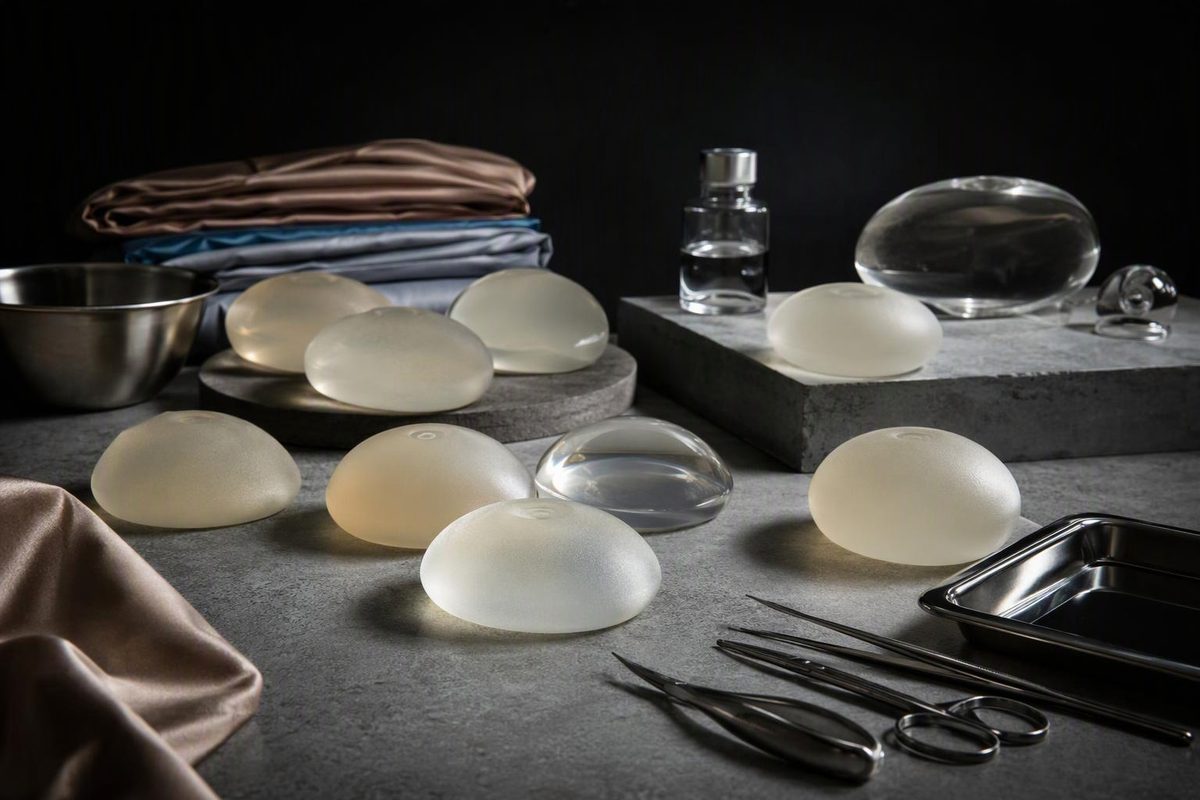
A 350 cc breast implant has a labeled filling volume of 350 milliliters—0.35 liter per implant. It does not correspond to a specific bra cup size. The abbreviation cc means cubic centimeters. The same volume can come in different widths and projections, and its appearance depends on your existing breast tissue, chest dimensions and skin. ASPS explains why anatomy and implant dimensions matter more than a cup-size target.
Treat 350 cc as a starting point for comparison, not a prescription for a particular look.
How wide is a 350 cc implant?
There is no single diameter. Profile describes the relationship between an implant’s width and its forward projection. At the same volume, a higher-profile implant is generally narrower and projects farther forward.
For a concrete example, Mentor’s January 2020 catalog lists these dimensions for its standard MemoryGel smooth round silicone implants:
| 350 cc implant profile | Diameter | Projection |
|---|---|---|
| Moderate Plus | 12.5 cm | 3.9 cm |
| High | 11.7 cm | 4.8 cm |
| Ultra High | 10.1 cm | 5.2 cm |
These are model-specific catalog measurements, not universal dimensions or a statement of current availability. The manufacturer notes that individual implant dimensions can vary slightly. Ask your surgeon for the current specifications of the exact device being proposed. Source: Mentor product catalog.
In that example, changing from Moderate Plus to High keeps the volume at 350 cc but reduces the diameter by 0.8 cm and increases projection by 0.9 cm. That is why comparing cc alone misses an important part of the choice. Our guide to moderate versus high-profile implants explains the tradeoff in more detail.
What cup size will 350 cc give me?
A promise such as “350 cc will make you a C cup” is not reliable. Bra cup sizing varies by brand, and your starting anatomy contributes to the final breast size and shape. ASPS identifies frame, skin quality, breast shape and the amount of natural breast tissue as factors that affect how an implant looks. ASPS sizing guidance.
For the same reason, 350 cc is not inherently “small,” “large” or “natural-looking.” Someone else’s before-and-after photograph can help you describe an appearance you like, but it cannot predict your result—even if their implant volume matches yours.
Bring examples of results you like and dislike. Explain what you notice: upper-breast fullness, forward projection, overall width or how the breasts look in clothing. ASPS recommends photographs to help patients and surgeons clarify these otherwise subjective descriptions.
Comparing 300, 350 and 400 cc
The volume difference between 300 and 350 cc is 50 mL per implant; between 350 and 400 cc, it is also 50 mL. Neither difference translates into a dependable cup-size change.
Ask to compare nearby sizes within the same implant line and profile, then compare suitable profiles separately. Otherwise, you may be comparing changes in shape as well as volume.
The consultation should connect your preferences to breast measurements. An ASPS-reported research review found that tissue-based planning appeared more promising than preference-only sizing, although the evidence was limited and did not establish one sizing system as definitively best. Review of implant-selection systems.
Useful questions for a board-certified plastic surgeon include:
- What is my measured breast width, and how does this implant fit it?
- What are the exact brand, model, diameter, projection, filling and shell surface?
- Why recommend 350 cc rather than the nearest smaller or larger option?
- Can I compare sizers or simulations, and what can those previews not show?
- Does my skin or tissue coverage limit the options? Would each breast need a different plan?
- How would implant placement above or below the muscle affect the tradeoffs for me?
Size is only part of the commitment
A 350 cc implant is still a medical device with risks, including rupture, infection, sensation changes and capsular contracture—tightening of the scar capsule around the implant. Breast implants are not lifetime devices, and further surgery may be needed. Review the proposed device’s patient labeling and decision checklist, not just its size. FDA risk guidance.
For silicone gel implants, U.S. FDA guidance recommends ultrasound or MRI for silent rupture beginning 5–6 years after surgery, then every 2–3 years, even without symptoms. This applies to cosmetic augmentation and reconstruction and does not replace breast-cancer screening. If symptoms develop, seek assessment rather than waiting for routine screening; FDA guidance recommends MRI for symptoms or uncertain ultrasound results for rupture. FDA labeling guidance. Include that ongoing care when comparing the total cost of breast implants.