
Low-Profile Implants Results: Width, Projection, and Fit
Compare low-profile implant dimensions, learn what shapes the final contour, and assess before-and-after photos without confusing profile with breast size.
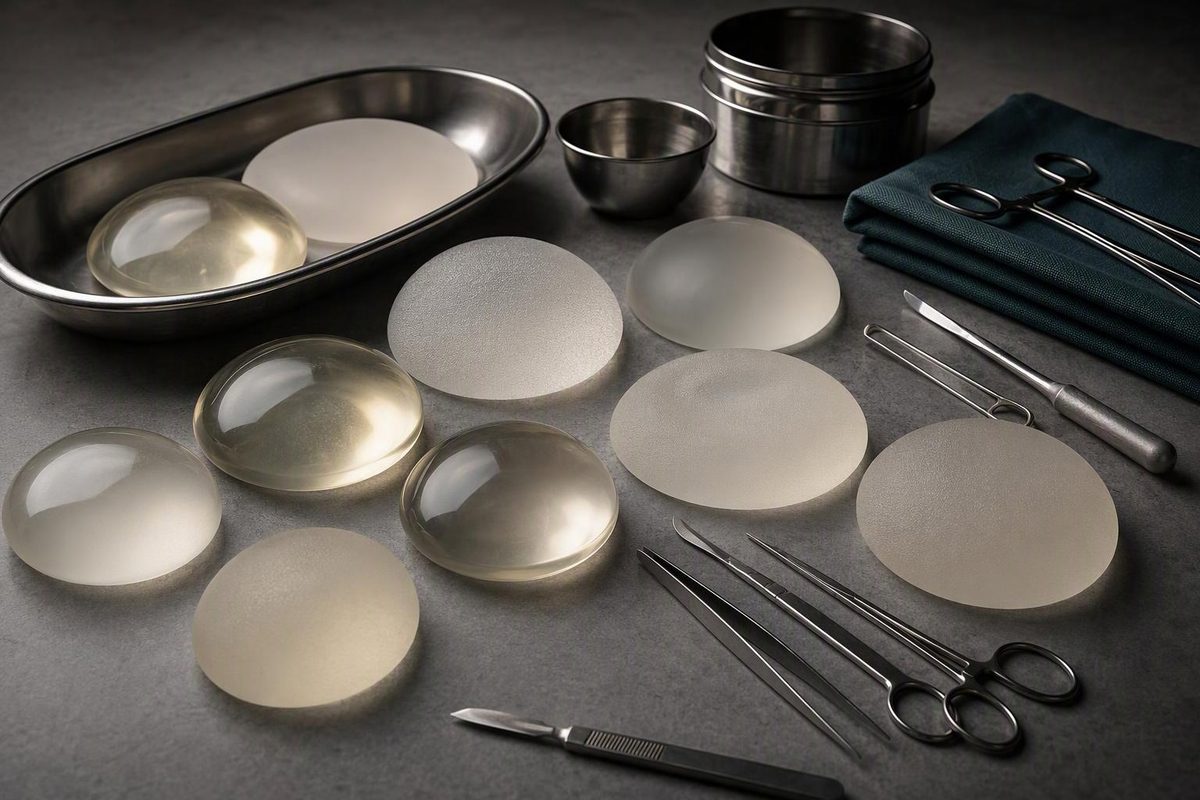
Low-profile breast implants generally produce less forward projection and a wider base at a similar volume than higher-profile implants. They may suit someone seeking a less projecting contour, but “low profile” does not guarantee a small, subtle or natural-looking result. Your existing breast tissue, skin, chest shape and surgical plan also determine the appearance. An ASPS-hosted explainer describes these profile differences.
Choose two implant models to compare their width and projection—not predict your finished breast shape.
Compare Implant Dimensions
Low vs Moderate: the low model is 1.5 cm wider and has 1.4 cm less projection.
Volume: 350 cc vs 345 cc per implant; these are not equal-volume models.
Device dimensions do not predict your finished breast dimensions or establish which implant fits you.
| Profile / Model | Volume | Width | Projection |
|---|---|---|---|
| LowSRL-350 | 350 cc | 14.0 cm | 2.8 cm |
| ModerateSRM-345 | 345 cc | 12.5 cm | 4.2 cm |
| FullSRF-345 | 345 cc | 11.75 cm | 4.8 cm |
Source: Natrelle INSPIRA planning guide, January 2024; three smooth models, not a universal profile chart.
Low Profile Means Less Projection, Not Necessarily Less Volume
Profile describes how far an implant projects forward from its base. Volume, measured in cubic centimeters (cc), describes how much it contains. A lower-profile implant distributes a similar volume across a wider base rather than concentrating it into greater projection.
The comparison above uses three smooth implant models from Natrelle’s January 2024 INSPIRA planning guide. The low-profile SRL-350 contains 350 cc, with a 14.0 cm base width and 2.8 cm projection. The moderate SRM-345 contains 345 cc, with a 12.5 cm base width and 4.2 cm projection. The full-profile SRF-345 also contains 345 cc, with an 11.75 cm base width and 4.8 cm projection. Source: Natrelle’s biodimensional planning guide.
These are device dimensions, not predictions of your finished breast measurements. The volumes are close, not identical, and the examples come from one manufacturer—not a universal sizing chart.
Profile names vary by brand. Ask for the exact model, width and projection rather than comparing labels alone. For a broader comparison, see moderate versus high-profile implants.
Your Starting Anatomy Shapes the Result
A lower-profile implant may create a less projecting side view than a higher-profile option at a similar volume. That does not mean the breast will look flat: the implant adds to the tissue already present. Low profile alone also cannot promise a particular upper-breast slope or degree of fullness.
ASPS’s patient guidance identifies your frame, anatomy, skin quality, breast shape and amount of natural tissue as contributors to the result. “Natural-looking” is subjective; two people may use that phrase for very different appearances. Its implant-selection guide recommends photographs to clarify those preferences.
A wider implant may be worth discussing if your breast base can accommodate it and you want less projection. But a broad chest is not, by itself, enough to choose an implant. Clinical planning also assesses breast base width, tissue thickness, skin stretch and nipple-to-breast-fold distance. A published tissue-based planning method describes these measurements.
The distinction matters when comparing implants: a model that looks less projecting in a product chart still needs to fit the tissue and dimensions of your breast. The chart cannot establish that fit.
Low-Profile Implants Do Not Replace a Needed Lift
Low-profile implants are not a substitute for a lift when significant drooping is the concern. Augmentation adds volume; it does not correct severely drooping breasts. ASPS advises that a lift may be needed.
If your main concern is breast position rather than forward projection, discuss that separately from implant profile. Our breast lift versus augmentation guide explains the distinction.
Compare Photos by Anatomy, Procedure, and Timing
Use before-and-after photos to communicate preferences, not to predict an identical result. Ask the surgeon to show cases with a starting breast shape and tissue coverage reasonably similar to yours.
For each example, establish the details that make it a useful comparison:
| Photo Detail | What to Confirm |
|---|---|
| Implant | Brand, model, volume, width and projection |
| Procedure | Augmentation alone, lift or revision |
| Placement | Where the implant was placed |
| Timing | When the after-photo was taken |
“Low profile” alone is not enough information. A lift or revision makes the case different from augmentation alone, and the proposed implant placement needs to be discussed in relation to your own anatomy.
Compare front, oblique and side views, ideally with similar posture and lighting. Identify exactly what you like or dislike: forward projection, upper-breast fullness, overall size or breast position. ASPS’s implant-selection guidance recommends showing both desired and undesired examples. Cup size is a poor substitute because bra sizing varies.
Breasts are larger immediately after augmentation, but swelling and skin stretching change their appearance over the following weeks. Early postoperative fullness is not the same as a settled contour. Follow-up visits matter more than judging the result from a single early photograph. ASPS describes the results and healing process.
Ask for a Comparison That Fits Your Measurements
At a consultation with a board-certified plastic surgeon, ask: “Which low-profile implant fits my measured breast base, and what would I gain or lose by choosing the next profile?” Request a side-by-side comparison of actual dimensions and, where available, try external sizers to discuss the intended change.
Keep appearance separate from safety. A low-profile label does not remove implant risks such as rippling, displacement, rupture or capsular contracture—the tightening of scar tissue around an implant. Implants are not lifetime devices, and complications may require further surgery. The FDA outlines these risks.
For silicone implants, include ongoing rupture screening in the plan. As of October 2026, Natrelle’s U.S. patient safety information recommends a first ultrasound or MRI at 5–6 years after implantation, then every 2–3 years even without symptoms. Ask your surgeon for the monitoring instructions for your specific device; those Natrelle instructions should not be treated as a universal schedule for every implant.
Report persistent swelling, pain, hardening, lumps or shape changes to your surgeon rather than treating them as an appearance issue alone. Natrelle’s patient safety information details monitoring and symptoms.